
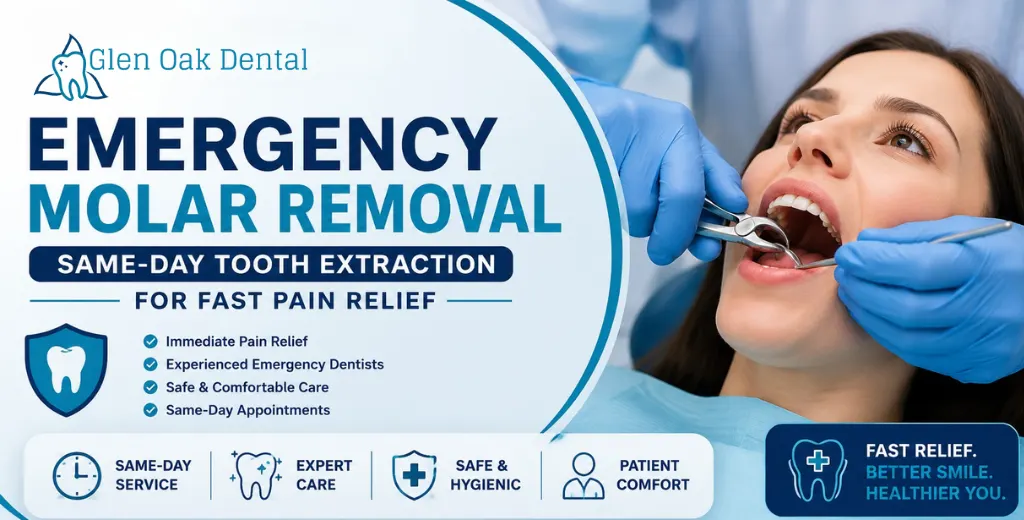
Emergency molar removal is the urgent extraction of a severely damaged, infected, or painful molar tooth when the tooth can no longer be saved. At Glen Oak Dental in North York, we offer same-day tooth extraction services to stop pain fast, control infection, and protect your overall oral health. Modern extraction is far less painful than the infection causing the problem — and most patients say they wish they had come in sooner.
Emergency Molar Removal: Same-Day Tooth Extraction
A molar toothache has terrible timing. It shows up before an important meeting, during a weekend dinner, or at 2 a.m. when every dental clinic suddenly feels 500 kilometres away. Patients try clove oil, ice packs, saltwater rinses, and even “just ignoring it.” Unfortunately, infected or damaged molars rarely respond to wishful thinking.
In many cases, emergency molar removal becomes the fastest and safest way to stop severe pain, control infection, and protect your overall oral health.
If you are searching for emergency tooth extraction, urgent dental care, or a same-day emergency dentist, this guide explains exactly what to expect, when to seek immediate treatment, and how recovery works after extraction. Our emergency dentistry team in North York is ready to help — the same day you call.
Why Prompt Treatment Matters
A damaged molar can affect your entire mouth surprisingly quickly. Infection may spread into the gums, jawbone, or nearby teeth if treatment gets delayed. That is why so many patients search terms like emergency dentist near me, dental extraction near me, same-day tooth extraction services, and tooth pulled near me. Most people searching those phrases are not casually browsing — they want immediate relief. And at Glen Oak Dental, that is exactly what we deliver.
What Is Emergency Molar Removal?
Emergency molar removal is the urgent extraction of a severely damaged, infected, or painful molar tooth. Dentists usually recommend this treatment when the tooth cannot be saved through fillings, crowns, or root canal therapy.
The primary goals are straightforward:
- Stop the pain immediately
- Remove the source of infection
- Protect nearby teeth from further damage
- Prevent more serious systemic complications
Signs You Need Emergency Tooth Extraction
Not every toothache means you need an extraction. Sometimes a filling or root canal can save the tooth. However, certain symptoms suggest emergency dental extraction may be necessary.
Severe, Constant Pain
Pain that keeps you awake or worsens while chewing often signals nerve infection or deep decay.
Swelling Around the Jaw or Face
Swelling usually means infection has spread beyond the tooth into surrounding tissues.
Broken or Cracked Molars
A cracked molar removal may become necessary if the fracture extends below the gum line and cannot support restoration.
Pus or Unpleasant Taste
These symptoms often point to a dental abscess requiring immediate attention.
Fever With Tooth Pain
A fever combined with swelling requires immediate dental attention — do not wait.
Difficulty Eating
Sharp pain while chewing may indicate the tooth structure has weakened significantly.
If these symptoms appear, do not wait for the pain to “settle down.” Teeth are not known for solving their own problems. Contact our same-day emergency dentist in North York right away.
Common Causes of Severe Molar Pain
Several dental issues can trigger the need for emergency molar extraction. Understanding the cause helps our team recommend the right treatment approach.
Advanced Tooth Decay
Untreated cavities eventually reach the inner pulp where nerves and blood vessels sit. Once infection develops, pain can intensify rapidly and extraction may become the only option.
Gum Disease
Advanced periodontal disease weakens the bone supporting molars, making them unstable and painful. Our professional teeth cleaning services in North York help prevent gum disease from reaching this stage.
Dental Abscess
An abscess creates pressure, swelling, and intense throbbing pain that typically will not resolve without professional treatment.
Trauma or Injury
Hard foods, sports injuries, or grinding can crack molars below the gum line, often making extraction necessary.
Failed Dental Work
Old fillings or crowns sometimes break down, exposing vulnerable areas underneath and allowing new decay or infection to develop.
According to the American Dental Association (ADA), untreated dental infections can affect overall health if bacteria spread beyond the mouth into the bloodstream.
Is Teeth Removal Painful?
This remains the most common question in emergency dentistry — and the honest answer may surprise you.
Modern tooth extraction is far less painful than the infection causing the problem. During emergency oral surgery, dentists use local anesthesia to completely numb the area. Patients usually feel pressure, movement, or vibration — but not sharp pain.
After the extraction, mild soreness is normal for a few days. Most patients describe the recovery like this:
- “Uncomfortable but manageable”
- “Better than the toothache”
- “I should have done this earlier”
That last one comes up surprisingly often at our tooth extraction clinic in North York.
What Happens During Emergency Dental Extraction?
Understanding the tooth extraction procedure step by step helps reduce anxiety and prepares you for what to expect at your appointment.
Step 1: Examination and X-Rays
Your dentist examines the tooth and takes digital X-rays to evaluate the roots, bone, and infection before proceeding.
Step 2: Numbing the Area
Local anesthesia ensures comfort throughout the procedure. You will feel pressure but not pain.
Step 3: Removing the Tooth
The dentist gently loosens and removes the molar. Some teeth require sectioning into smaller pieces for easier, safer removal.
Step 4: Cleaning the Site
The socket gets cleaned carefully to remove bacteria and infected tissue, reducing the risk of complications.
Step 5: Recovery Instructions
You will receive detailed instructions about eating, pain management, and healing before you leave.
Simple extractions often take 20–40 minutes. More complex emergency molar extraction cases may require additional time depending on root shape and infection severity.
Same-Day Tooth Extraction Services Explained
Dental emergencies rarely arrive with advance notice. That is why same-day tooth extraction services matter — and why our North York clinic prioritises urgent appointments every day.
Patients seeking urgent dental care typically need:
- Immediate pain relief — not a two-week wait
- Infection control to prevent spreading
- Fast, accurate diagnosis using digital imaging
- Same-day treatment options wherever clinically possible
A same-day emergency dentist evaluates the situation quickly and performs treatment during the same visit whenever possible. This approach helps patients avoid worsening infections, severe swelling, emergency room visits, extended pain, and unnecessary treatment costs.
At Glen Oak Dental, emergency dentistry focuses on balancing immediate relief with long-term oral health planning — so you leave with both comfort and a clear path forward.
Emergency Molar Removal vs Root Canal Treatment
Many patients hope they can avoid extraction completely. In some cases, that is entirely possible.
When Root Canal May Save the Tooth
Our team at Glen Oak Dental’s root canal clinic in North York usually recommends root canal therapy if:
- The tooth structure remains stable and restorable
- Bone support looks healthy around the root
- Infection has not spread extensively into surrounding tissue
When Emergency Extraction Becomes Necessary
Emergency molar removal may become necessary if:
- The tooth is severely cracked below the gum line
- Infection has damaged the surrounding bone significantly
- Previous treatment (filling, crown, or root canal) has failed
- The tooth cannot structurally support a restoration
An experienced emergency dental team will always explain both options clearly before any treatment begins — you will never be surprised by the recommendation.
After Teeth Removal Pain: What to Expect During Recovery
Healing after molar removal usually progresses smoothly when patients follow aftercare instructions carefully. Here is what a typical recovery timeline looks like.
First 24 Hours
You may notice mild bleeding, swelling, tenderness, and some jaw stiffness. This is completely normal. Rest is important during this period.
Days 2–3
Swelling often peaks during this period before gradually subsiding. Over-the-counter pain relief and cold compresses help manage discomfort.
One Week Later
Most patients feel significantly better and begin to resume normal activities, including a wider range of soft foods.
Complete Healing
The gum tissue heals within a few weeks, although deeper bone healing continues for several months.
To Improve Your Recovery
- Avoid smoking throughout healing
- Eat soft foods only for the first several days
- Avoid drinking through straws — the suction can dislodge the clot
- Rest for the first day after extraction
- Follow all medication and aftercare instructions carefully
Patients who skip aftercare instructions increase the risk of dry socket — a painful condition where the protective blood clot becomes dislodged before the wound heals. If you experience unusual pain several days after extraction, contact our emergency dental team in North York immediately.
Can an Infected Molar Be Removed Immediately?
Yes — in many cases, infected molar removal can happen on the same day you call. However, our dentists first evaluate several key factors before proceeding.
- Swelling severity and spread
- Your medical history and current medications
- How far infection has spread into surrounding tissue
- Whether local anesthesia can effectively numb the area safely
Sometimes a short course of antibiotics helps reduce acute swelling before extraction. In other cases, immediate tooth extraction provides the fastest route to pain relief.
According to the Canadian Dental Association (CDA), prompt treatment for oral infections significantly reduces the risk of complications affecting surrounding tissues, the jawbone, and in severe cases, systemic health.
How Long Does Molar Extraction Take?
Most patients expect a dramatic, lengthy procedure. In reality, molar extraction is far more routine and efficient than television suggests.
Typical Procedure Timing
- Simple extractions: 20–40 minutes for most routine cases
- Surgical extractions: 45–90 minutes for more complex situations
Factors That Affect Timing
- Tooth position and accessibility in the mouth
- Root shape, length, and curvature
- Surrounding bone density
- Severity of existing infection
- Whether the tooth has broken below the gum line
An experienced emergency oral surgeon can usually complete treatment efficiently during one visit, with no need for multiple appointments in most standard cases.
Emergency Dentist Near Me: When to Seek Immediate Care
Some symptoms require genuinely urgent dental attention — not a “wait and see” approach. Contact an emergency dentist near you immediately if you experience any of the following.
- Severe, uncontrolled swelling in the jaw or face
- Fever combined with tooth pain or facial swelling
- Uncontrolled bleeding from the mouth
- Difficulty swallowing due to swelling
- Sudden severe tooth pain with no obvious cause
- Broken teeth with exposed nerve tissue
- Pus or foul discharge near a tooth
Many patients wait too long hoping the pain will disappear. Unfortunately, infected teeth rarely improve without professional treatment — and delays allow infections to spread further. Our emergency dentist team in North York is available for same-day appointments. Call us at 416-551-8480.
Emergency Molar Removal Cost and Consultation Options
The cost of emergency dental extraction in Canada varies based on a number of clinical and patient-specific factors.
Factors That Affect the Final Price
- Simple vs surgical extraction requirements
- Whether sedation or additional anaesthesia is needed
- Diagnostic imaging (X-rays) and pre-treatment assessment
- Severity of the infection and complexity of the case
- Your insurance coverage and plan limits
Most Canadian dental insurance plans provide partial coverage for tooth extractions. At Glen Oak Dental, we direct bill Sun Life, Manulife, Great-West Life, and Equitable Life. We also provide a full cost breakdown during consultation so there are no surprises before treatment begins.
What Happens After Tooth Extraction?
Removing a molar solves the immediate pain problem — but replacing the missing tooth may still matter for your long-term oral health and function.
Why Missing Molars Matter
Missing molars can gradually affect chewing function, jaw alignment, bite stability, and the positioning of adjacent teeth as they drift into the empty space.
Common Replacement Options
Dental Implants
Dental implants in North York are the strongest, most natural-feeling long-term replacement option. They function, feel, and look like real teeth.
Dental Bridges
Dental bridges in North York are fixed restorations supported by the healthy teeth on either side of the gap — a reliable and long-lasting option.
Partial Dentures
Partial dentures offer a removable alternative for patients who need to replace one or more missing teeth without surgery.
Some patients qualify for same-day tooth extraction and implant placement during one visit, although infection severity and bone condition determine eligibility. Our team will assess your specific situation and walk you through every option.
What the ADA, CDA, and Health Canada Say About Emergency Dental Care
All three major dental and health authorities in North America provide consistent guidance on the importance of prompt treatment for dental infections and emergencies.
American Dental Association — Oral Infection Guidance
The American Dental Association (ADA) emphasises that untreated dental infections can spread beyond the mouth and affect overall systemic health. The ADA recommends seeking professional care promptly for any signs of dental abscess, severe swelling, or persistent uncontrolled tooth pain. Delaying treatment of an oral infection is never advisable, as bacteria can enter the bloodstream and cause serious complications.
Canadian Dental Association — Emergency Care Standards
The Canadian Dental Association (CDA) supports prompt intervention for acute dental emergencies, including same-day extraction when clinically indicated. The CDA recognises that emergency dental access remains a significant public health concern in Canada and encourages patients to seek care at the first signs of infection or severe pain rather than waiting for symptoms to worsen. All emergency care at Glen Oak Dental follows CDA clinical guidelines.
Health Canada — Oral Health and Systemic Wellbeing
Health Canada recognises oral health as a critical component of overall physical wellbeing. Dental infections left untreated can contribute to systemic inflammation, cardiovascular risk, and complications for patients with diabetes or compromised immune systems. Health Canada’s expanding dental benefit programs reflect a national commitment to improving access to essential dental care — including emergency extractions — for eligible Canadians. Patients should check whether they qualify under the Canada Dental Plan for coverage of emergency dental procedures.
How to Prevent Future Dental Emergencies
Nobody wants another emergency dental appointment. The good news is that many dental emergencies — including the need for molar extraction — are entirely preventable with consistent care.
Visit Your Dentist Regularly
Routine exams catch problems before they become emergencies. Professional teeth cleanings in North York remove buildup that contributes to decay and gum disease before damage becomes irreversible.
Don’t Ignore Small Cavities
Tiny cavities become expensive, painful emergencies surprisingly fast. Treat them early while a filling is still possible.
Wear a Mouthguard
Protection matters during contact sports and if you grind your teeth at night. A custom nightguard prevents fractures that can lead to extraction.
Maintain Daily Oral Hygiene
Brushing twice daily and flossing remain your best long-term defence against decay, gum disease, and tooth loss.
Address Sensitivity Early
Persistent tooth sensitivity often signals deeper decay or early nerve involvement. Early treatment through root canal therapy or a filling can save a tooth that would otherwise require extraction later.
Consider Cosmetic or Restorative Options After Healing
Once your extraction site has healed completely, cosmetic dentistry options in North York — including implants, bridges, or teeth whitening — can restore your smile fully. Preventive care always costs far less than emergency dentistry.
Frequently Asked Questions: Emergency Molar Removal
This article was developed using clinically accurate dental information and reviewed against guidance from trusted organisations including the American Dental Association (ADA), the Canadian Dental Association (CDA), and Health Canada.
Need Same-Day Emergency Tooth Extraction in North York?
Glen Oak Dental — 2827 Bathurst Street, North York, ON M6B 3A4
Phone: 416-551-8480 | glenoakdental.ca
Led by Dr. Roya Khoshsar, D.D.S. — 15+ years of clinical experience in North York
Same-day emergency appointments available | Accepting new patients of all ages | Direct insurance billing
Whether you need an emergency tooth extraction, are exploring dental implants after extraction, or want to discuss root canal treatment as an alternative — our team delivers a full clinical assessment and honest guidance at every step. You can also explore dental bridges, dentures, or cosmetic dentistry options to complete your smile restoration after healing.