
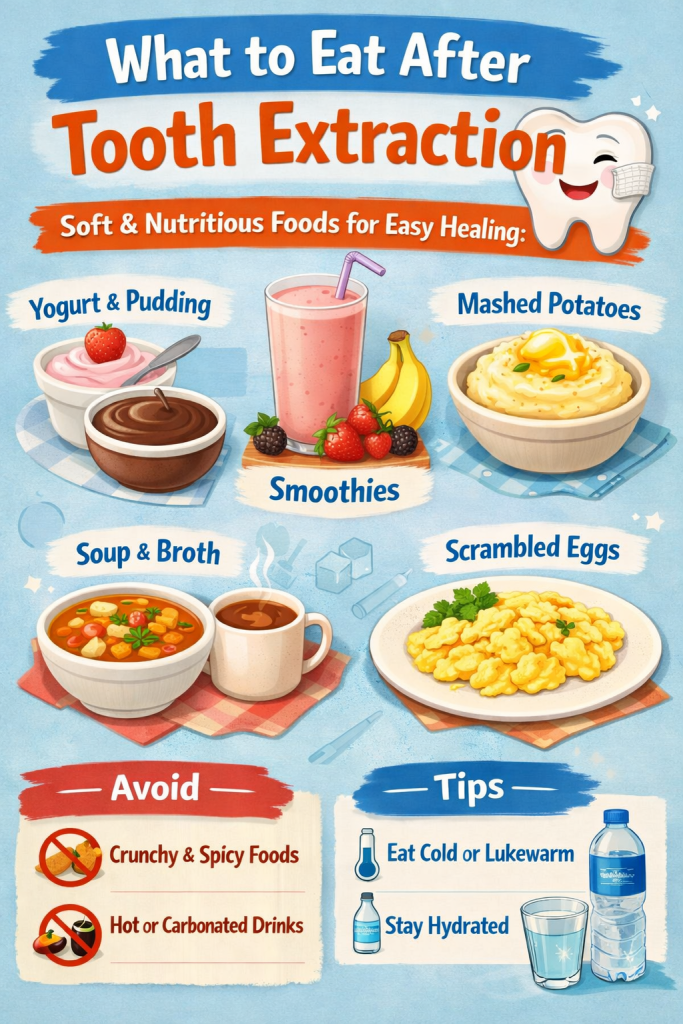
Having a tooth removed can leave your mouth sore and sensitive — and eating the wrong foods can slow healing or cause complications like dry socket. Choosing the right foods helps protect the extraction site, reduce pain, and speed recovery.
This guide explains exactly what to eat (and avoid) after a tooth extraction so you heal comfortably.
Why Diet Matters After Extraction
After a dental extraction, a blood clot forms in the socket. This clot protects nerves and bone while new tissue grows. Eating inappropriate foods can:
- Dislodge the clot
- Cause bleeding
- Introduce bacteria
- Delay healing
Dental health organizations emphasize soft, non-irritating foods during the first days of recovery.
Best Foods to Eat After Tooth Extraction
First 24 Hours (Ultra-Soft Foods)
Stick to cool or room-temperature options:
- Yogurt
- Applesauce
- Smoothies (no straw)
- Mashed potatoes
- Pudding
- Broth or blended soups
- Scrambled eggs
These require minimal chewing and protect the clot.
Days 2–3 (Soft, Nutrient-Rich Foods)
As discomfort improves, introduce:
- Oatmeal
- Cottage cheese
- Soft pasta
- Avocado
- Soft fish
- Rice
- Bananas
These provide protein and nutrients that support healing.
After 3–7 Days (Gradual Transition)
You can slowly return to normal foods if comfortable:
- Tender chicken
- Steamed vegetables
- Soft sandwiches
- Cooked grains
Avoid chewing directly near the extraction site.
Foods to Avoid
These can interfere with healing:
- Crunchy chips or nuts
- Hard bread or crusts
- Spicy foods
- Acidic foods
- Sticky candy
- Alcohol
- Carbonated drinks
- Using straws
Suction from straws can cause dry socket, a painful complication.
Hydration Tips
Drink plenty of water — but:
- Sip gently
- Avoid hot beverages initially
- Skip straws
Hydration supports tissue repair.
Healing Nutrition Tips
To recover faster:
- Eat protein (eggs, yogurt, fish)
- Choose vitamin-rich foods
- Avoid smoking
- Follow dentist instructions
- Maintain gentle oral hygiene
FAQ
Conclusion
Eating the right foods after tooth extraction helps protect your mouth, reduce discomfort, and promote faster healing. Focus on soft, nutritious meals early, avoid irritating foods, and gradually reintroduce normal textures as you recover.If pain or swelling persists, contact your dentist for guidance.