
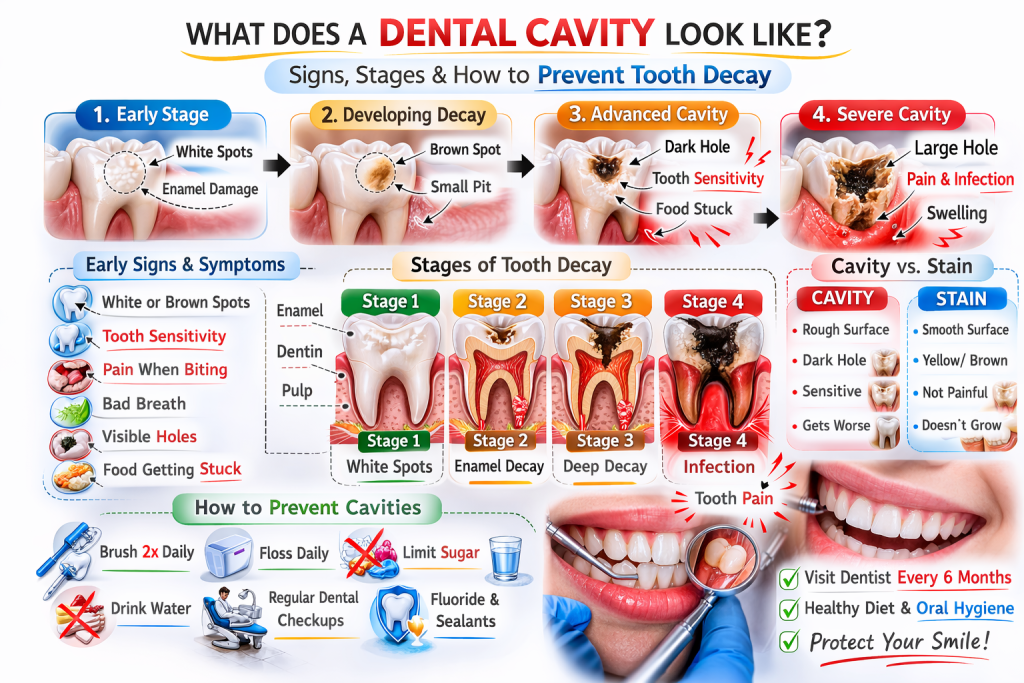
A dental cavity can look like a white chalky spot, brown stain, or visible hole in your tooth. In early stages it may be painless, but later it often causes sensitivity, dark pits, or toothache.
If you’re wondering whether a mark on your tooth is decay — this guide explains exactly what to look for, with clear descriptions and prevention advice for patients across Canada.
Jump to What You Need
- What cavities look like (fast visual descriptions)
- Early warning signs
- Stages of tooth decay
- Cavity vs stain — how to tell
- When to see a dentist in Canada
- Prevention tips
What Does a Cavity Look Like? (By Stage)
Early Demineralization
- Chalky white patch on enamel
- Dull or rough surface
- Usually no pain
What it means: Minerals are being lost from enamel. This stage may still be reversible.
Small Cavity Forming
- Light brown or dark spot
- Tiny pit or rough groove
- Sensitivity to sweets or cold
This is when decay begins breaking enamel and professional treatment is needed.
Established Tooth Decay
- Visible hole
- Black or dark brown discoloration
- Food getting stuck
- Tooth sensitivity or pain
Filling treatment is typically required.
Severe Decay
- Large cavity
- Persistent toothache
- Swelling or infection signs
This may require root canal or extraction.
Early Signs You Might Have a Cavity
Many Canadians search this before they ever see a dentist.
Watch for:
- Tooth sensitivity
- Pain when biting
- Bad breath
- Visible spots
- Floss tearing between teeth
- Metallic taste
⚠️ Important: Cavities can develop without symptoms, which is why regular dental checkups matter.
Cavity vs Stain — How to Tell the Difference
| Feature | Likely Cavity | Likely Stain |
|---|---|---|
| Texture | Rough | Smooth |
| Shape | Pit or hole | Flat |
| Sensitivity | Often present | Rare |
| Color | Dark brown/black | Yellow/brown |
| Location | Grooves / between teeth | Surface areas |
Only a dental exam or X-ray can confirm.
When Should Canadians See a Dentist?
Book an appointment if you notice:
- Tooth pain
- Visible holes
- Lingering sensitivity
- Swelling or bleeding gums
- Spots that don’t brush off
Early treatment saves cost, discomfort, and tooth structure.
How to Prevent Cavities
Daily Habits
- Brush twice daily with fluoride toothpaste
- Floss once per day
- Limit sugary snacks
- Drink water after meals
Professional Care
- Routine checkups
- Professional cleanings
- Fluoride treatments
- Sealants (for children)
Preventive dentistry remains the most cost-effective oral health strategy.
FAQ
Final Takeaway
Cavities don’t always look dramatic at first. A small white patch or dark speck may be the earliest sign. Knowing what to look for helps Canadians act early, avoid pain, and protect their long-term oral health.
If you’re unsure about a spot on your tooth, a dental evaluation is the safest next step.