
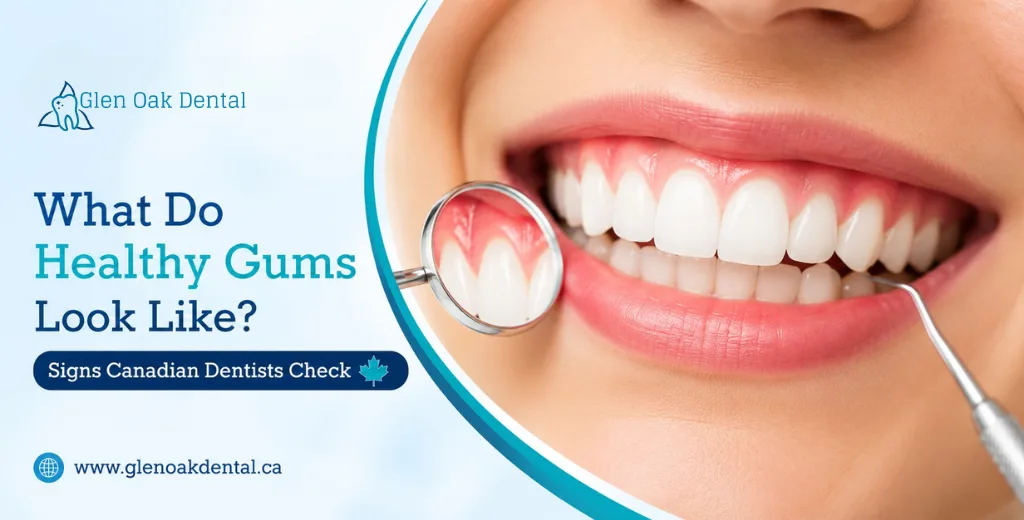
What Do Healthy Gums Look Like?
Why Gum Health Matters More Than You Think
We all love a bright, white smile. We spend hours choosing the right whitening toothpaste and perfecting our brushing angles. Yet, we often ignore the very foundation that holds our teeth in place — our gums. If your teeth are the stars of the show, your gums are the stage. If the stage collapses, the show ends.
So, what do healthy gums look like? It is a question I hear almost every day in the clinic. Many patients only think about their gums when they feel pain or see blood in the sink. However, your gingival health (the medical term for gum health) tells a detailed story about your overall well-being. The Canadian Dental Association (CDA) notes that nearly seven out of ten Canadians will develop gum disease at some point in their lives. We can lower that number simply by knowing what to look for.
As a dental professional at Galt Dental Care, I want to help you understand your mouth. You do not need a dental degree to spot the early signs of unhealthy gums. You just need to know the basic characteristics of healthy gums. Let us break down exactly what healthy gums look like, how they feel, and what you need to do to keep them in top shape.
What Do Healthy Gums Look Like? The Visual Signs
When I perform a routine dental examination, I do not just look for cavities. I perform a comprehensive oral health assessment, carefully inspecting the soft tissues supporting your teeth. I evaluate three main visual categories: colour, texture, and shape.
Healthy Gum Colour
What colour should healthy gums be? If you search online, you will likely read that healthy gums are coral pink. While this is true for many people, it is not the complete truth. Healthy gum colour varies significantly based on your genetics and natural skin pigmentation.
If you have a fair complexion, your gums will likely appear light pink. If you have a darker complexion, your gums naturally produce more melanin. This means your healthy gums might look dark brown, purple, or feature a mix of pink and brown patches. These variations are completely natural and healthy.
Dentists look for consistency. Healthy gums maintain a uniform colour across your entire mouth. They should never look bright red, white, or blotchy. A sudden shift from your baseline colour often signals gum inflammation.
Healthy Gum Texture
Healthy gum tissue features a very specific texture. If you dry your gums with a clean tissue and look closely in the mirror, you might notice tiny dimples across the surface. Dentists call this “stippling.”
Stippled gums look remarkably similar to the outside of an orange peel. This texture indicates strong, healthy connective tissues anchoring your gums tightly to the underlying bone. While not everyone has naturally stippled gums, their presence generally confirms excellent periodontal health. Conversely, gums that look slick, shiny, and stretched tight usually indicate fluid buildup and swelling underneath the surface.
Healthy Gum Shape
Your gums should hug each tooth tightly. We refer to this as the gum contour. Healthy gums form a precise, scalloped border that wraps securely around the base of every tooth.
Think of a freshly tailored shirt — it fits perfectly without sagging. Healthy gums end in a sharp, “knife-edge” shape right where the tooth meets the root. They fill the small triangular spaces between your teeth completely. They do not pull away, droop, or expose the yellowish root of the tooth.
Signs of Healthy Gums
Visual appearance gives us clues, but physical function confirms the diagnosis. You can easily test how healthy your gums are during your daily oral hygiene routine.
Pink and Firm Gums
Healthy gums feel firm and resilient to the touch. If you press gently on healthy gum tissue with your clean finger, it should feel dense and slightly springy. The tissue should bounce right back. It should never feel spongy, mushy, or tender. Firm gum tissue creates a strong protective barrier against harmful bacteria, preventing them from slipping below the gum line and attacking the bone.
No Bleeding
Let us address the most common myth in dentistry: “My gums bleed because I flossed too hard.”
Healthy gums do not bleed. Period.
Your hands do not bleed when you wash them. Your scalp does not bleed when you brush your hair. Your gums should never bleed when you brush or floss correctly. Bleeding gums act as an alarm bell. When plaque bacteria sit on your teeth for too long, they release toxins. Your body responds by sending excess blood to the area to fight the bacterial infection. This makes the blood vessels weak and leaky. As a result, even the gentle touch of a toothbrush causes them to break open. If you want to know how to tell if your gums are healthy, look at your toothbrush foam. It should remain completely white.
No Swelling
Inflammation causes swelling. When your gums trap plaque buildup, your immune system launches an attack. This immune response causes the gum tissues to retain fluid. Healthy gums sit flat against the bone. They never look puffy, bulbous, or swollen. If your gums look like they swallowed a balloon between your teeth, you are looking at an active infection.
Healthy Gums vs Unhealthy Gums
Understanding the difference between healthy and diseased gums empowers you to take action before permanent damage occurs. We classify gum health on a spectrum.
Healthy Gums Appearance
To recap, healthy gums and teeth work together harmoniously. The tissue feels firm, looks consistent in colour (whether pink or brown), forms a tight scalloped seal, and tolerates daily brushing and flossing without a single drop of blood. You experience zero pain while eating, and your breath stays relatively neutral.
Gingivitis Symptoms
Gingivitis represents the earliest stage of gum disease. At this stage, the bacteria have irritated the superficial layers of the gum tissue.
You will notice early signs of unhealthy gums: bright red colouration, puffy swelling around the base of the teeth, and bleeding when you brush or floss. You might also notice a dull ache or sensitivity. The good news? Gingivitis is completely reversible. Because the infection has not yet damaged the bone, a professional dental cleaning and strict daily oral hygiene can easily restore your gingival health. You can literally watch the transition of healthy gums before and after treatment within just a couple of weeks.
Periodontal Disease Signs
If you ignore gingivitis, it transforms into periodontitis (severe gum disease). This condition is irreversible and incredibly destructive.
The plaque hardens into a substance called tartar (or calculus), which acts like a splinter under your skin. The gums pull away from the teeth, creating deep pockets. Bacteria flood into these pockets and begin destroying the bone that holds your teeth in place. Symptoms of periodontal disease include chronic bad breath, gums that ooze pus, extreme tooth sensitivity, and loose teeth. In advanced stages, you will lose the teeth entirely. This is why gum disease prevention remains our top priority.
How to Keep Your Gums Healthy
You possess the power to maintain healthy gums naturally. Building a routine takes discipline, but the daily steps are quite simple.
Daily Brushing
The Canadian Dental Association (CDA) recommends brushing your teeth for two full minutes, twice a day. However, technique matters more than time. Use a soft-bristled toothbrush. Hard bristles physically tear the delicate gum tissue and strip away your tooth enamel.
Aim your brush at a 45-degree angle right where the tooth meets the gum. Gently sweep the bristles in small circles to disrupt the sticky plaque biofilm. Never scrub back and forth aggressively. Aggressive scrubbing leads directly to gum recession.
Flossing Habits
Your toothbrush cannot reach the tight spaces between your teeth. If you do not floss, you leave roughly 35% of your tooth surfaces completely uncleaned.
Wrap a piece of floss around your middle fingers. Slide it gently between two teeth. Curve the floss into a “C” shape against the side of one tooth, and slide it up and down to scrape away the hidden plaque. Repeat this for the neighbouring tooth. If manual flossing frustrates you, invest in a water flosser. These devices use a targeted stream of water to blast away plaque and massage the gum tissue simultaneously.
Professional Dental Cleanings
Even the best brushers miss spots. Plaque turns into rock-hard tartar in just 48 hours. Once tartar forms, no toothbrush or floss in the world can remove it. You need professional tools.
At Galt Dental Care, we provide thorough deep teeth cleaning services to remove this stubborn tartar before it triggers bone loss. If you are searching for the best dentist for healthy gums in Cambridge, our team prioritizes preventive dentistry. We thoroughly measure your gum pockets during every visit, ensuring we catch the slightest changes in your oral health early.
What the ADA, CDA, and Health Canada Say About Gum Health
Three major dental authorities provide the clinical standards that guide how we monitor and protect gum health in Canadian dental practices. Their guidelines are the foundation of every gum assessment we perform.
American Dental Association — Gum Disease Is a Preventable Condition
The American Dental Association (ADA) recognizes periodontal (gum) disease as one of the most common but preventable oral health conditions. The ADA emphasizes that consistent daily brushing, interdental cleaning, and routine professional examinations are the cornerstone of gum disease prevention. The ADA supports the use of periodontal probing during dental visits as the standard clinical method for assessing gum pocket depth and identifying early disease. Their clinical guidelines confirm that early-stage gingivitis is fully reversible with professional care and improved home hygiene.
Canadian Dental Association — Evidence-Based Gum Care Standards
The Canadian Dental Association (CDA) advocates for a patient-centred, evidence-based approach to periodontal health management. The CDA’s clinical position supports regular monitoring of gingival tissue colour, texture, contour, and pocket depth as the primary indicators of gum health. The CDA endorses patient education on proper brushing technique, flossing, and the role of professional cleaning in preventing the progression from gingivitis to irreversible periodontitis. All gum assessments at Galt Dental Care align directly with CDA clinical recommendations.
Health Canada — Oral Health as Part of Overall Health
Health Canada recognizes oral health as an integral component of overall systemic health. Health Canada’s national guidelines link untreated gum disease to broader health risks, including cardiovascular conditions and diabetes complications. Health Canada supports preventive oral health care and encourages all Canadians to attend regular dental checkups for early detection of gum disease. All materials and instruments used during gum assessments and cleaning procedures at licensed Canadian clinics are regulated and approved by Health Canada for safety and efficacy.
When to Visit a Dentist for Gum Concerns
Do not wait for your scheduled checkup if you notice sudden changes in your mouth. Your body constantly communicates with you. Listen to these three major warning signs.
Bleeding Gums
As established earlier, healthy gums do not bleed. If your gums bleed consistently for more than a week despite gentle, daily flossing and brushing, you need an oral health assessment. We need to locate the hidden tartar deposits causing the chronic inflammation. Book a professional cleaning at our Cambridge clinic to address this early.
Gum Recession
Do your teeth suddenly look longer than they used to? Do you feel a sharp zing of pain when you drink cold water? These are classic signs of gum recession. The gum tissue has pulled back, exposing the sensitive root of the tooth. Aggressive brushing, teeth grinding, and severe gum disease all cause recession. Once the gum tissue disappears, it does not grow back naturally. If you are experiencing these symptoms, visit your family dentist in Cambridge immediately to halt the progression.
Persistent Bad Breath
Everyone experiences morning breath. However, if you suffer from persistent bad breath that returns immediately after you brush and use mouthwash, you likely have a deeper issue. Anaerobic bacteria living deep inside infected gum pockets produce foul-smelling sulfur compounds. A mint simply masks the smell; periodontal therapy treats the root cause. If you are unsure, schedule an urgent dental assessment with our team.
Complete Oral Health: How Gum Care Fits Into Your Dental Plan
Healthy gums deliver the best results when your overall oral health is supported by a full range of complementary services. At Galt Dental Care, we offer a complete set of treatments that work alongside gum care to protect and enhance your smile:
- Professional teeth cleaning in Cambridge — essential for removing tartar and maintaining optimal gum health at every stage
- Family dentistry in Cambridge — preventive care and routine checkups for the whole family to catch gum issues early
- Children’s dentistry in Cambridge — early gum health monitoring and oral hygiene education for young patients
- Cosmetic dentistry in Cambridge — smile enhancements that complement healthy, well-maintained gum tissue
- Teeth whitening in Cambridge — safely brightening your smile once your gum health is confirmed and restored
- Root canal therapy in Cambridge — treating underlying tooth infections that can compromise surrounding gum tissue
- Emergency dentistry in Cambridge — same-day care for sudden gum pain, swelling, or trauma requiring urgent attention
- Dental implants in Cambridge — long-term tooth replacement solutions that require healthy gum tissue for successful placement
- Crowns and bridges in Cambridge — restorative options that work best when supported by strong, healthy gum tissue
- Orthodontics in Cambridge — straighter teeth are healthier teeth, as proper alignment reduces the areas where plaque traps and gum disease starts
Frequently Asked Questions About Healthy Gums
Ready to Check Your Gum Health in Cambridge?
Your gums are the foundation of your entire smile. Whether you have noticed bleeding, puffiness, or simply want a professional assessment to confirm your gum health, the best first step is booking a comprehensive examination with an experienced dental team who genuinely cares about your long-term oral wellness.
Ready to Schedule Your Gum Health Assessment in Cambridge?
Galt Dental Care — Cambridge, Ontario
Phone: 519-622-5950 | Email: familydentist491@outlook.com | galtdentalcare.ca
Gum health assessments available | Accepting new patients of all ages | Direct insurance billing | CDCP patients welcome
Whether you need a professional teeth cleaning, are concerned about urgent gum pain or swelling, want to explore comprehensive family dental care, or need advice on maintaining healthy gums at home — our Cambridge team delivers honest, transparent guidance at every step.
This educational guide was developed using clinically accurate dental guidelines to ensure the highest standard of patient education. The facts and statistics cited regarding gingival health, periodontal disease, and daily oral hygiene routines align strictly with the official recommendations of the Canadian Dental Association (CDA), the American Dental Association (ADA), and Health Canada. The content was structured following advanced SEO and AI optimization best practices to provide clear, actionable, and human-centric medical information.