
Healthy Gums: What They Look Like and Why They Matter
Understanding Gum Health at Glen Oak Dental North York
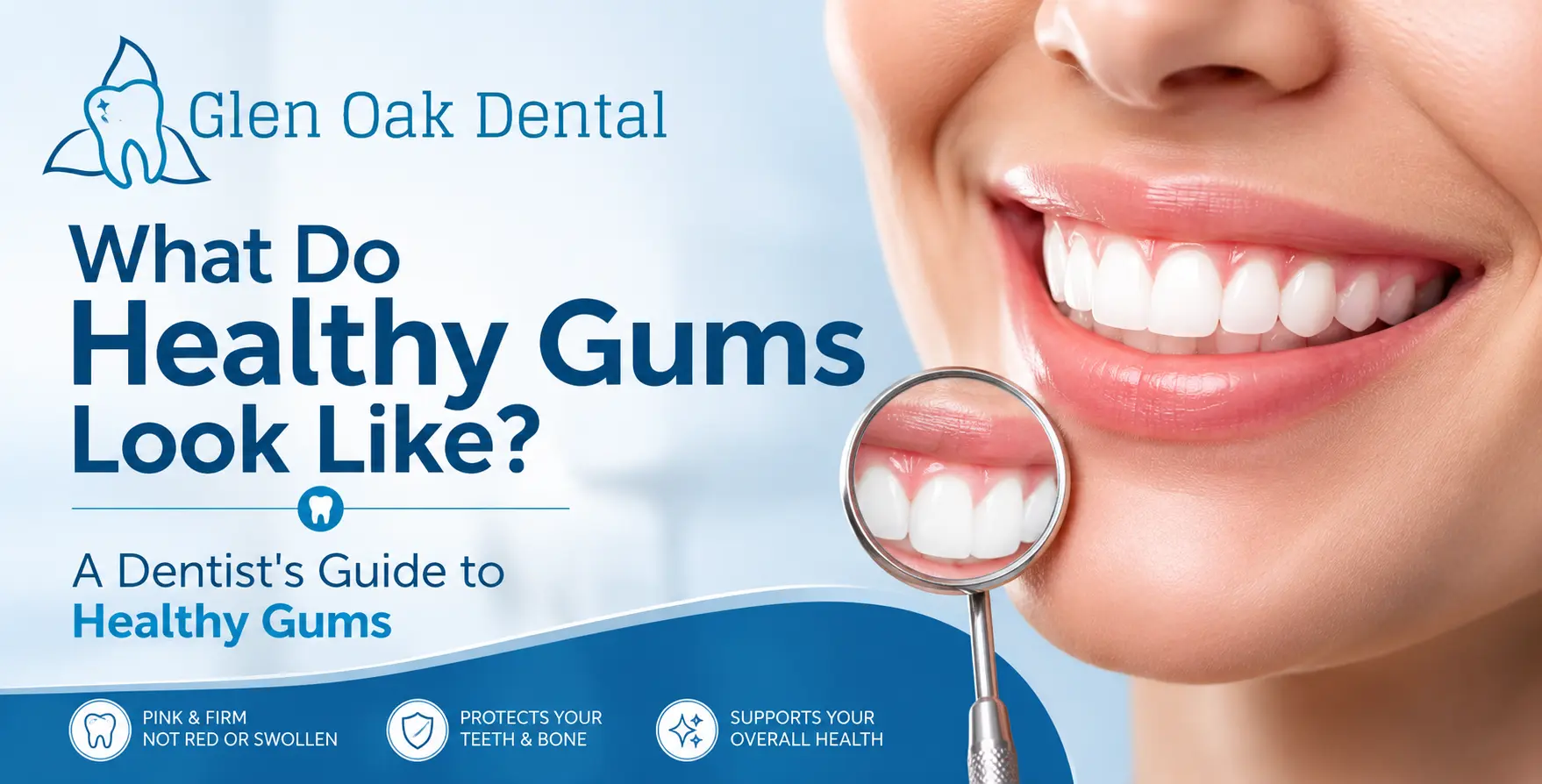
Healthy gums are typically pink, firm, and tightly attached to the teeth without bleeding, swelling, or tenderness. They should not bleed during brushing or flossing, and they should not look shiny, puffy, or receded. If your gums have changed in color, texture, or comfort, that is often an early warning sign of gingivitis or periodontal disease.
At Glen Oak Dental, one of the most common questions we hear from new patients is: “Are my gums supposed to look like this?” Whether you have noticed some bleeding when flossing, a change in gum color, or just want to understand what normal looks like, this guide is for you.
Gum health is not just about your smile’s appearance. It is a direct reflection of your overall oral health. Problems that begin in the gums — if left unaddressed — can progress into periodontal disease, bone loss, and even tooth loss. The good news is that with the right information and consistent care, most gum issues can be prevented or reversed early.
- Healthy gums: Pink, firm, and stable — no bleeding, swelling, or recession.
- Unhealthy gums: Red, puffy, bleeding, or pulling away from teeth.
- Gingivitis: Early, reversible inflammation from plaque buildup along the gumline.
- Periodontal disease: Advanced infection affecting the gums, ligament, and supporting bone.
What Do Healthy Gums Look Like?
Healthy gums usually have a coral-pink appearance, but natural color can vary depending on skin tone and pigmentation. The tissue should feel firm rather than spongy, and the gumline should form a smooth, even frame around each tooth.
In most cases, healthy gums do not bleed when you brush or floss correctly. Another sign of healthy gums is stability — the gumline should not look as though it is pulling away from the teeth, and the spaces between teeth should not appear swollen or inflamed. If your gums look calm and feel comfortable, that is a strong sign that the tissues are healthy.
Our team at professional teeth cleaning in North York routinely assesses gum health at every visit, so patients always know where they stand.
Healthy Gums vs Unhealthy Gums
Healthy gums and unhealthy gums can often be distinguished by color, texture, and bleeding. Unhealthy gums may appear red, dark red, purple, or shiny, and they may feel sore or swollen. Bleeding when brushing or flossing is one of the most common early warning signs of inflammation.
Other signs of unhealthy gums include bad breath that does not go away, tenderness, gum recession, and a change in the way teeth fit together. In more advanced cases, gums may begin to pull away from the teeth, creating pockets where bacteria collect. That is why early attention matters so much. If you are noticing any of these changes, our emergency dentist in North York is available for urgent assessments as well.
Signs of Unhealthy Gums
Knowing the warning signs early gives you the best chance of reversing damage before it becomes serious.
- Bleeding during brushing or flossing.
- Swollen, shiny, or puffy tissue.
- Redness or darker gum color from inflammation.
- Gum recession or teeth that look longer.
- Persistent bad breath or bad taste.
- Tenderness when eating or brushing.
- Loose teeth or spacing changes.
If you are experiencing any of these symptoms, our dental team at Glen Oak Dental recommends scheduling an exam as soon as possible. Early intervention makes treatment far simpler and more effective.
Healthy Gums vs Gingivitis
Gingivitis is the earliest stage of gum disease and usually means the gums are inflamed but the supporting bone is still intact. Healthy gums stay firm and calm, while gingivitis often causes bleeding, redness, and puffiness along the gumline. The encouraging part is that gingivitis is often reversible when it is caught early.
People with gingivitis may not feel pain right away, which is why the condition is easy to miss. A person may think their gums are “just sensitive,” when in fact plaque buildup is causing inflammation. Regular cleanings and better home care can often restore a healthier appearance before the problem becomes more serious.
Our professional teeth cleaning service in North York is designed specifically to remove plaque and tartar buildup that brushing alone cannot reach — the primary driver of gingivitis.
Healthy Gums vs Periodontal Disease
Periodontal disease is a more advanced form of gum disease that affects the gums and the bone that supports the teeth. Unlike gingivitis, it can lead to pocket formation, bone loss, and tooth loosening if untreated.
Periodontal disease often develops gradually, which means people may not notice it until the damage is more advanced. Common signs include gum recession, bleeding, chronic bad breath, and teeth that feel slightly mobile. Once bone support is lost, treatment usually becomes more complex than a standard cleaning. In some cases, dental implants or dental bridges may be needed to replace teeth lost to advanced periodontal disease.
What Are Periodontal Diseases?
The term periodontal diseases refers to infections and inflammatory conditions that affect the supporting tissues around the teeth. This includes the gums, periodontal ligament, and bone.
The most common progression begins with plaque-related gingivitis and can advance into periodontitis if bacterial buildup and inflammation continue. Children and families are not immune — our children’s and family dentistry team in North York monitors gum health in patients of all ages, including those with orthodontic appliances that make cleaning more difficult.
Early Signs of Gum Disease
The early signs of gum disease are often subtle. Gums may bleed a little when flossing, appear red near the tooth edges, or feel puffy after meals.
Some people also notice their breath smells worse even after brushing, which can happen when plaque and bacteria collect below the gumline. Other early signs include mild gum tenderness and a slight change in gum contour. If you notice these symptoms, it does not automatically mean you have severe disease — but it does mean you should not ignore the problem. Early treatment is much easier than restoring lost bone or tissue later.
Gum Disease White Spots and Color Changes
White spots on the gums are not a classic sign of gum disease, but they should still be examined if they persist.
They can result from irritation, trauma, fungal infection, mouth breathing, smoking, or tissue changes caused by poor oral hygiene. In some cases, white patches may appear alongside inflamed gums, especially if the area is irritated or infected.
Because gum disease white spots can have several causes, appearance alone is not enough to diagnose the issue. A dentist may need to check whether the spots wipe away, stay fixed, or appear with other symptoms such as redness or soreness. If a white area lasts more than two weeks, it should be assessed by our dental team at Glen Oak Dental.
How Can You Tell If You Have Gum Disease?
The easiest way to tell if you may have gum disease is to look for bleeding, swelling, recession, or persistent bad breath. If your gums bleed regularly or feel tender, that is not considered normal.
A dental exam can confirm whether the problem is gingivitis or periodontal disease. Dentists also check gum pocket depth, plaque buildup, and bone levels on X-rays when needed. At home, you can monitor whether symptoms improve after one to two weeks of consistent brushing and flossing. If the bleeding continues, the condition may need professional treatment. Do not hesitate to contact our clinic — if symptoms worsen suddenly, our emergency dentist in North York offers same-day appointments for urgent gum concerns.
Gingivitis Prevention with Brushing and Flossing
Brushing and flossing are the foundation of gingivitis prevention. Brush twice daily with fluoride toothpaste using gentle, circular motions along the gumline, and floss once daily to remove plaque between the teeth.
If you have tight contacts, braces, bridges, or implants, interdental brushes or a water flosser may also help. A soft-bristled toothbrush is usually best for avoiding trauma to the gums. Pressure matters more than force — vigorous brushing can irritate the tissue and make the gumline look worse. Consistency is far more important than brushing hard.
For patients undergoing orthodontic treatment, gum care becomes even more critical. Our team coordinates gum health monitoring with Invisalign and orthodontic treatment in North York to ensure healthy tissue throughout the process.
From Practice: What We See at Glen Oak Dental
In preventive dentistry, one of the most common patterns is that patients notice bleeding when flossing, then assume it is temporary. When they improve home care and have a professional cleaning, the gums often return to a calmer pink appearance and bleed less within a short period. When the same symptoms are ignored for months, treatment often becomes more involved.
A second common case is a patient who thinks their gums are healthy because they do not have pain. Once examined, we often find early inflammation, tartar buildup, or recession that had gone unnoticed. Gum disease is frequently silent until it becomes more advanced, which is why routine checks — including regular dental cleanings — are so valuable.
In cases where gum disease has already caused structural damage, our team may recommend root canal therapy or restorative work to preserve the affected teeth before further deterioration occurs.
Expert Insight on Gum Health
Healthy gums are not only about appearance. They are a marker of how well inflammation is controlled in the mouth. If your gums are changing shape, bleeding, or pulling away from the teeth, your body is signalling that plaque control or professional treatment may be needed.
The best approach is to act early, before discomfort starts. Gingivitis can often be reversed, but periodontal disease requires more careful management to protect the tissues holding the teeth in place. That is why prevention is always easier than repair. Our full range of cosmetic and restorative dental services in North York is available to help restore your smile once gum health has been stabilized.
Why Gum Health Matters in Canada
For Canadian patients, preventive oral care is especially important because gum disease is common and often underdiagnosed until it becomes advanced.
Regular cleanings, consistent home care, and early assessment can reduce the chance of needing complex periodontal treatment later. This matters even more for adults with diabetes, smoking history, pregnancy-related gum changes, or dry mouth from medications.
Families should also pay attention to gum health in children and teens, especially if orthodontic appliances make cleaning more difficult. Healthy gums in childhood support a healthier mouth into adulthood. A strong prevention routine can protect both teeth and supporting tissues for the long term. Our family and children’s dentistry team is here to support every stage of your family’s oral health journey.
For patients who have experienced tooth loss related to gum disease, dentures in North York and dental implants offer reliable restoration solutions.
What the CDA, and Health Canada Say About Gum Disease
Major dental and health authorities provide clear, evidence-based guidance on gum disease prevention and treatment. Their recommendations align directly with the care approach at Glen Oak Dental.
Canadian Dental Association — Evidence-Based Gum Care Standards
The Canadian Dental Association (CDA) supports a patient-centred, evidence-based approach to managing periodontal health. The CDA emphasises that bleeding gums are never normal and should be evaluated promptly by a dental professional. Clinical guidelines from the CDA recommend regular scaling and root planing for patients with diagnosed gum disease, alongside consistent at-home oral hygiene practices. All gum health discussions at Glen Oak Dental follow CDA clinical standards.
Health Canada — Oral Health as Part of Overall Health
Health Canada identifies oral health — including gum health — as a critical component of general wellbeing. Health Canada’s oral health data confirms that periodontal disease disproportionately affects adults with systemic conditions such as diabetes and cardiovascular disease, making early detection and regular dental visits essential for these populations. All materials and procedures used at licensed Canadian dental clinics, including those for gum treatment, are regulated and approved by Health Canada for safety and biocompatibility.
Complete Oral Health: How Gum Care Fits Into Your Dental Plan
Healthy gums provide the foundation for every other aspect of your oral health. At Glen Oak Dental, we offer a full range of supporting services that work alongside gum disease prevention and treatment:
- Professional teeth cleaning in North York — essential for removing tartar and plaque below the gumline to prevent gingivitis.
- Children’s and family dentistry in North York — early gum health monitoring for patients of all ages.
- Emergency dentistry in North York — same-day care for severe gum pain, swelling, or dental trauma.
- Root canal therapy in North York — when gum-related infections spread to the tooth pulp and require deeper treatment.
- Tooth implants in North York — for replacing teeth lost to advanced periodontal disease.
- Dental bridges in North York — restoring missing teeth when implants are not the preferred option.
- Dentures in North York — comprehensive tooth replacement for patients requiring full mouth rehabilitation.
- Cosmetic dentistry in North York — smile restoration after gum disease treatment is complete.
- Teeth whitening in North York — brighten your smile once gum health is restored and stable.
- Invisalign and orthodontic treatment in North York — straighter teeth are easier to clean, reducing long-term gum disease risk.
- Tooth extraction in North York — when a tooth cannot be saved due to advanced gum and bone damage.
Conclusion
Healthy gums look calm, pink, firm, and stable around each tooth. If your gums bleed, swell, recede, or change color, that is a sign to take action early rather than wait for pain. Brushing, flossing, and regular dental visits remain the most effective way to prevent gingivitis and protect against periodontal disease. Whether you are dealing with the first signs of gum inflammation or looking for a reliable dental home for your family’s long-term care, Glen Oak Dental is here to help at every stage.
Frequently Asked Questions About Gum Health
Ready to Protect Your Gum Health in North York?
Your gums are the foundation of your entire smile. Whether you have noticed early signs of inflammation or simply want a professional assessment, the best step you can take is booking an appointment with a trusted dental team who understands gum health from the ground up.
Book Your Gum Health Assessment in North York
Glen Oak Dental — 2827 Bathurst Street, North York, ON M6B 3A4
Phone: 416-551-8480 | glenoakdental.ca
Led by Dr. Roya Khoshsar, D.D.S. — 15+ years of clinical experience in North York
Gum assessments available | Accepting new patients of all ages | Direct insurance billing
Whether you need a professional teeth cleaning to reverse early gingivitis, require emergency dental care for sudden gum pain, or want to restore your smile after gum disease with cosmetic dentistry — our team delivers honest, transparent guidance at every step.
This guide was carefully developed to provide accurate, highly readable, and trustworthy information about gum health, gingivitis, and periodontal disease. The content is directly based on established clinical dental guidelines and has been cross-referenced with trusted medical sources including official recommendations from the Canadian Dental Association (CDA), the American Dental Association (ADA), and Health Canada.