
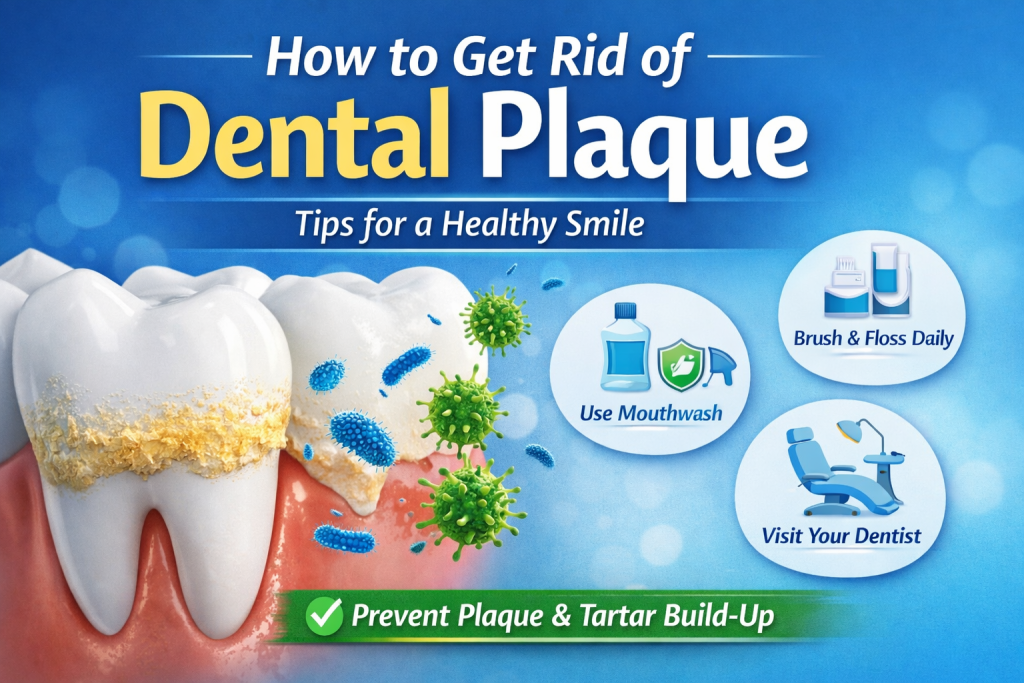
What Is Dental Plaque?
Dental plaque is a sticky, colorless film of bacteria that forms on your teeth throughout the day. It develops when food particles—especially sugars and starches—combine with bacteria in your mouth.
If not removed daily, plaque can:
- Cause cavities
- Lead to gum disease (gingivitis)
- Harden into tartar
- Create bad breath
Plaque begins forming within hours after brushing.
Why Plaque Is Dangerous
Plaque bacteria produce acids that attack tooth enamel. Over time, this can lead to:
- Enamel erosion
- Tooth sensitivity
- Gum inflammation
- Periodontal disease
Once plaque hardens into tartar, it cannot be removed at home.
How to Get Rid of Dental Plaque
Brush Properly Twice a Day
Brushing is your first line of defense.
Best technique:
- Use a soft-bristled toothbrush
- Brush for at least 2 minutes
- Hold at a 45-degree angle to gums
- Use gentle circular motions
- Clean the gumline and back molars
Electric toothbrushes may remove more plaque than manual brushes.
Floss Daily
Floss removes plaque between teeth where brushes cannot reach.
How to floss correctly:
- Use about 18 inches of floss
- Curve around each tooth in a C-shape
- Gently move below the gumline
Skipping flossing is one of the biggest causes of plaque buildup.
Use Antibacterial Mouthwash
Mouthwash reduces plaque-causing bacteria.
Look for:
- Fluoride
- Cetylpyridinium chloride (CPC)
- Essential oils
Mouthwash supports brushing and flossing — it does not replace them.
Use Tartar-Control Toothpaste
Anti-plaque toothpaste contains ingredients that help prevent plaque from hardening into tartar.
Brush consistently with fluoride toothpaste for maximum protection.
Professional Plaque & Tartar Removal
If plaque turns into tartar, a dentist or hygienist must remove it.
Professional cleaning includes:
- Scaling
- Polishing
- Gum evaluation
Most people should visit the dentist every 6 months.
Foods That Help Reduce Plaque
Certain foods naturally reduce bacteria:
- Apples and carrots (natural scrubbing action)
- Cheese and yogurt (calcium strengthens enamel)
- Green tea (antibacterial compounds)
- Water (rinses debris)
Avoid sugary snacks and acidic beverages.
Signs You Have Excess Plaque
- Yellow buildup near gums
- Bleeding while brushing
- Persistent bad breath
- Red or swollen gums
If symptoms continue, consult a dentist.
Prevention Tips for Long-Term Oral Health
- Brush twice daily
- Floss every day
- Replace toothbrush every 3 months
- Avoid frequent sugary snacks
- Schedule regular dental visits
Consistency is key to plaque control.
FAQs
Conclusion
Dental plaque forms daily, but it can be controlled with proper oral hygiene and regular dental care. By following a consistent routine and seeking professional cleanings when necessary, you can protect your teeth and gums from long-term damage.