
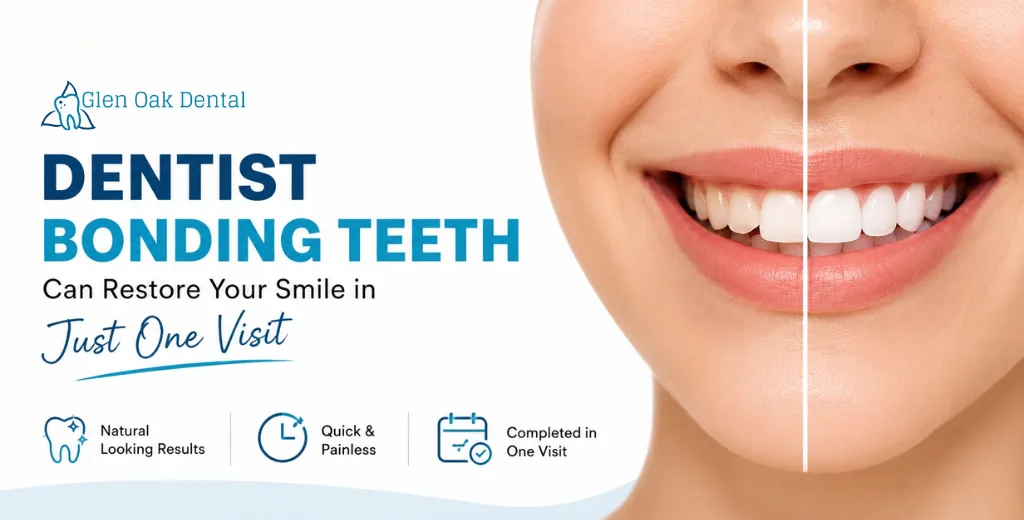
Teeth bonding is a quick, affordable cosmetic procedure where a tooth-colored composite resin is applied, sculpted, and hardened onto your teeth — all in a single visit. At Glen Oak Dental, composite bonding repairs chipped teeth, closes gaps, masks discoloration, and corrects uneven teeth — all without needles or lengthy lab waits. Furthermore, most treatments are completed in just 30 to 60 minutes with no pain and immediate results.
Dentist Bonding Teeth – What You Must Know Before Your Appointment
Why Patients Choose Teeth Bonding at Glen Oak Dental
Have you spotted a tiny chip on your front tooth? Perhaps a small gap always catches food — and your attention — in photos. You want to fix it. However, weeks of clinic visits, injections, and temporary teeth sound exhausting. That is why so many patients are looking for something quick, non-invasive, and budget-friendly.
That is exactly what a teeth bonding dentist provides. In fact, composite bonding reshapes your smile in one appointment. At Glen Oak Dental, patients are consistently surprised to learn they do not need crowns or expensive veneers to love their smile.
Is Dental Bonding Right for You?
Most minor cosmetic concerns — chips, gaps, stains, and uneven edges — are ideal candidates for dentist bonding teeth treatment. Moreover, the procedure is completed in a single visit with no lab work, no temporary restorations, and no waiting.
Are you experiencing a broken or chipped tooth right now? If so, our emergency dentist team in North York offers same-day appointments — call 416-551-8480 right away.
What is Dentist Bonding Teeth? How Composite Resin Works
When we talk about cosmetic dental bonding, we are referring to a procedure where a durable, tooth-colored plastic material is applied to your teeth. Dentists call this material composite resin bonding.
Think of it like sculpting for your mouth. First, the resin starts as a soft, pliable paste. Next, we shape and mold it to match the contours of your natural tooth. Once the shape is perfect, we cure it with a high-intensity light. This triggers a chemical reaction that hardens the material in seconds, bonding it permanently to your enamel.
Why Teeth Bonding Is a Favorite for Quick Smile Changes
- It mimics natural enamel: The resin comes in dozens of subtle shades. As a result, we can match the material to your specific teeth so nobody can tell where your natural tooth ends and the repair begins.
- It preserves your natural tooth structure: Unlike dental crowns or traditional porcelain veneers — which require significant enamel removal — bonding requires almost no tooth preparation at all.
- It is incredibly fast: It is the ultimate same day dental bonding solution. In most cases, we can complete a single tooth in about 30 to 60 minutes.
What Can Dental Bonding Repair?
Many people assume that cosmetic dentistry is only for major, Hollywood-style transformations. However, most dental concerns are much smaller than that. Dental bonding services act like a Swiss Army knife for minor structural and aesthetic smile imperfections.
1. Repair Chipped Teeth and Fix Cracked Tooth Issues
Life happens. Whether you bit down on a rogue popcorn kernel or had a minor mishap with a water bottle, chipping a front tooth is incredibly common. Fortunately, a teeth bonding for chipped tooth procedure replaces the missing piece of enamel seamlessly. By rebuilding the edge of the tooth, we restore its structural strength and, therefore, stop the chip from turning into a deeper, more painful crack. For severe fractures, our team may additionally recommend root canal therapy in North York if the inner nerve has been compromised.
2. Close Teeth Gaps Without Braces
If you have a small gap between your front teeth — known medically as a diastema — you do not necessarily need years of orthodontic treatment to close it. Instead, we can apply the tooth-colored bonding material to the sides of the two adjacent teeth, widening them slightly to close teeth gaps safely. It is, consequently, a fantastic quick smile makeover that changes the symmetry of your entire face. For larger alignment concerns, however, our Invisalign treatment in North York may be a more suitable long-term solution.
3. Mask Stained Teeth and Discoloration
Some tooth stains simply do not respond to traditional chemical teeth whitening. This often happens if you had exposure to certain antibiotics — like tetracycline — as a child, or if a tooth has experienced internal nerve trauma. In these cases, a cosmetic dentist bonding teeth can apply a thin layer of opaque composite resin over the discolored enamel, hiding the dark spots completely. If you are considering whitening before bonding, we recommend exploring our professional teeth whitening services in North York first.
4. Uneven Teeth Correction and Minor Tooth Reshaping
Not everyone is born with perfectly uniform teeth. Some teeth might be slightly shorter than others, or they may have rough, uneven ridges along the chewing edges. In these situations, we use minor tooth reshaping techniques alongside bonding to lengthen short teeth, smooth out jagged edges, and create a straight, harmonious smile line. Our broader cosmetic dentistry services in North York can additionally help you plan a complete smile transformation if multiple corrections are needed.
The Step-by-Step Teeth Bonding Procedure at Glen Oak Dental
One of the biggest benefits of professional teeth bonding is how straightforward the process is. Most patients expect a long, uncomfortable experience. In reality, however, it is a relaxed, pain-free dentist bonding teeth appointment from start to finish.
Here is exactly what happens during your same day dentist bonding teeth visit:
Step 1: The Shade Selection
First, we use a shade guide to match composite resin to your exact tooth color. We check under natural light for accuracy. Importantly, if you plan to whiten your teeth, do that before bonding — because whitening gels do not change composite resin color after it has been applied.
Step 2: Preparing the Tooth Surface for Composite Bonding
Next, we apply a mild conditioning liquid to the enamel. This etches the surface on a microscopic level, creating a better grip for the resin. You will not feel anything during this step, so there is no discomfort to worry about.
Step 3: Applying and Sculpting the Resin
After preparing the surface, we apply a liquid bonding agent first, then add the putty-like composite resin. Using dental instruments, we mold and shape it carefully so the edges are blended and the transition is invisible.
Step 4: Curing with Light
We then shine a blue curing light on the tooth for 20 to 40 seconds. This hardens the resin instantly, transforming the soft material into a durable, solid restoration in a matter of seconds.
Step 5: Final Shaping and Polishing Your Bonded Tooth
Finally, we trim any micro-excesses with fine dental burs. You bite down on articulating paper to check alignment. Then we polish the resin with wheels and discs, giving it the same natural gloss as your surrounding enamel.
Clinical Reality: Pros and Cons of Teeth Bonding Treatment
While cosmetic teeth bonding is excellent for many patients, it is not ideal for every situation. Therefore, understanding the clinical balance helps you make the best decision for your smile.
The Advantages of Composite Dental Bonding
- Highly Cost-Effective: Bonding costs far less than veneers or crowns. As a result, it is the most affordable cosmetic dentistry option for high-impact smile results.
- Minimal Invasiveness: We do not alter your healthy tooth structure. Additionally, no needles are needed in most cases, which means no numb lips after your visit.
- Instant Results: You arrive with a chipped tooth and leave with a complete smile. There are no temporary teeth, no lab waiting period, and no follow-up visits required.
The Limitations of Tooth Bonding to Know
- Lower Stain Resistance: Composite resin is porous. Consequently, coffee, red wine, and tobacco can stain the edges over time. However, our professional teeth cleaning team in North York can polish bonded surfaces during your routine visits.
- Durability Differences: Resin is not as strong as porcelain or natural enamel. Therefore, avoid chewing ice or biting fingernails, as these habits can chip the bonding material over time.
Longevity: How Long Does Dentist Bonding Teeth Last?
A top question during every teeth bonding consultation is: “How long will this last?” On average, a well-maintained tooth bonding treatment lasts 3 to 10 years. However, two key factors determine where your restoration falls on that range.
1. Location and Bite Forces on Your Bonded Tooth
Bonding placed on biting edges takes more daily stress and, therefore, wears faster than bonding near the gumline. If you grind your teeth at night — a condition called bruxism — the forces can cause premature wear or fracture. In that case, we often recommend a custom nightguard to protect the restoration.
2. Daily Care Habits That Extend Teeth Bonding Life
Caring for bonded teeth is simple. Treat them like your natural teeth, and consistent hygiene will make a big difference in longevity.
- Brush twice a day with a soft-bristled toothbrush. Use non-abrasive fluoride toothpaste. Importantly, avoid harsh whitening pastes — they can scratch and dull the resin surface.
- Floss daily along the margins where resin meets your tooth. This prevents decay from forming underneath the bonding over time.
- Book regular cleanings at Glen Oak Dental in North York. Our hygienists polish bonded teeth and check structural integrity at every visit.
Financial Breakdown: Affordable Teeth Bonding Cost in North York
Budget matters when exploring smile improvements. Fortunately, the cost of dentist bonding teeth is significantly lower than veneers or full crowns, making it an accessible option for most patients.
Factors That Influence Your Composite Bonding Investment
- The Complexity of the Case: A small chip takes less time and material. Closing multiple large gaps, however, takes considerably more. As a result, complexity directly affects the total cost.
- Insurance Coverage: Bonding for cosmetic reasons may not be covered. However, if the tooth bonding treatment repairs structural damage from injury or decay, your insurer may cover a portion of the cost.
- Location of the Tooth: Front teeth bonding requires higher aesthetic precision. Matching the translucency of front enamel takes more time and skill, which can influence the final price.
Ask about teeth bonding financing options or flexible payment plans at your first visit. Contact our team in North York for a transparent, personalised quote before treatment begins.
Comparing Your Options: Bonding vs. Veneers vs. Crowns
If you are trying to decide whether dentist bonding teeth is truly the best path forward, it helps to see how it stacks up against other standard procedures. The table below summarises the key differences so you can make a more confident, informed decision.
| Feature | Dental Bonding | Porcelain Veneers | Dental Crowns |
|---|---|---|---|
| Primary Material | Composite Resin | Dental Porcelain | Porcelain, Ceramic, or Metal |
| Time Commitment | Single Visit (30–60 mins) | 2 to 3 Visits (Requires Lab) | 2 Visits (Requires Lab) |
| Enamel Alteration | Virtually None | Minimal (Front Surface Only) | Significant (Shaving Entire Tooth) |
| Average Lifespan | 3 to 10 Years | 10 to 15+ Years | 10 to 15+ Years |
| Stain Resistance | Moderate | High | High |
| Relative Cost | Highly Budget-Friendly | Higher Investment | Higher Investment |
What the ADA, CDA, and Health Canada Say About Teeth Bonding
Three major dental authorities support composite resin bonding as a safe, evidence-based cosmetic procedure. Together, their guidelines give patients and providers strong confidence in this treatment.
American Dental Association — Composite Resin Bonding Is Clinically Accepted
The American Dental Association (ADA) recognizes composite resin as a widely accepted restorative and cosmetic material. Specifically, the ADA supports its use for chipped, cracked, and discolored teeth. All bonding must, however, be performed by a licensed dentist after a thorough evaluation of bite and tooth structure. The ADA also emphasises patient education on care habits, including avoiding hard foods and abrasive toothpaste, which are critical for long-term longevity.
Canadian Dental Association — Evidence-Based Cosmetic Dentistry Standards
The Canadian Dental Association (CDA) endorses a patient-centred approach to cosmetic dental treatment. Importantly, the CDA supports composite bonding as a minimally invasive alternative to destructive restorations. Furthermore, the clinical decision between bonding, veneers, and crowns must always prioritise preserving healthy tooth structure. All cosmetic procedures at Glen Oak Dental follow CDA clinical guidelines accordingly.
Health Canada — Dental Material Safety and Regulatory Standards
Health Canada regulates all dental materials used in licensed Canadian clinics, including composite resins and light-curing devices. As a result, all bonding materials at Glen Oak Dental meet Health Canada approval criteria. Patients, therefore, receive tested, safe, and biocompatible materials at every single visit.
Complete Oral Health: How Teeth Bonding Fits Into Your Dental Plan
Dental bonding delivers the best outcomes when your overall oral health is optimised both before and after the procedure. At Glen Oak Dental, a full range of supporting services surrounds every cosmetic case. As a result, we maximise your results and protect your long-term smile health:
Supporting Services That Complement Your Bonding Treatment
- Cosmetic dentistry in North York — our specialists handle complete smile makeovers, veneers, and artistic transformations alongside bonding
- Teeth whitening in North York — complete your whitening treatment before bonding to achieve a perfectly matched, brighter smile
- Invisalign treatment in North York — corrects larger alignment issues that bonding alone cannot address
- Professional teeth cleaning in North York — essential before any cosmetic procedure for optimal gum health and better bonding adhesion
- Root canal therapy in North York — when a chipped or cracked tooth has internal nerve involvement requiring treatment before bonding
- Tooth implants in North York — for cases where a tooth is too damaged for bonding and full replacement is the better option
- Dental bridges in North York — restoring adjacent teeth where extensive damage has occurred beyond the scope of bonding
- Emergency dentistry in North York — for urgent chipped or broken teeth requiring immediate same-day care
- Children’s and family dentistry — early prevention and monitoring to protect developing teeth from chips and damage
Frequently Asked Questions About Dentist Bonding Teeth
No, the procedure is completely pain-free. Because the treatment takes place on the outer surface of your enamel — where there are no nerve endings — we rarely need to use local numbing injections. You might feel some light pressure as we shape the material, but that is all. If dental anxiety is a concern, simply ask our team about the comfort options available at Glen Oak Dental.
While it is technically possible, bonding is best suited for targeted corrections on teeth that do not experience extreme, direct biting forces. For major changes across your entire mouth, structural options like porcelain veneers or full smile makeovers in North York usually offer better long-term predictability. Therefore, we recommend a full consultation to determine the right approach for your specific needs.
If your bonding chips, do not panic — it is a very common occurrence. Simply call our clinic to arrange a repair appointment, as it is usually a quick fix. In the meantime, avoid chewing heavy or hard foods on that tooth to prevent further damage to the remaining material. If you need urgent attention, our emergency dentist in North York offers same-day appointments.
It depends on why you are getting the treatment. If the bonding is used to restore a tooth damaged by decay or a physical injury, many insurance policies will cover a percentage of the treatment. If, however, it is done purely to improve the appearance of an otherwise healthy smile, it may be considered elective. Contact our team to review your coverage before your appointment.
No. Traditional professional whitening gels only work on natural tooth structure — they cannot penetrate or change the color of synthetic composite resins. As a result, if you want a brighter overall smile, we strongly recommend completing a professional teeth whitening treatment in North York first. Then, wait a couple of weeks for the color to stabilize before we color-match the bonding material to your new shade.
Yes, you can eat and drink normally as soon as you leave the office, because the curing light hardens the material instantly. However, we advise avoiding exceptionally hard foods or dark liquids for the first 48 hours while the surface polish fully settles. After that, routine professional cleanings in North York will help maintain the colour and surface integrity of your bonding long term.
Ready for Your Smile Enhancement Treatment?
Your smile is a huge part of how you connect with the world. Therefore, you do not have to live with a chipped edge, an uneven line, or a gap that makes you hesitate before a photo.
Getting a quick smile makeover through dental bonding is, moreover, one of the safest, fastest, and most rewarding decisions you can make for your confidence. If you are ready to fix a minor imperfection, the best first step is to book a teeth bonding appointment with an experienced provider who understands both the art and science of dental materials.
Ready to Schedule Your Teeth Bonding in North York?
Glen Oak Dental — 2827 Bathurst Street, North York, ON M6B 3A4
Phone: 416-551-8480 | glenoakdental.ca
Led by Dr. Roya Khoshsar, D.D.S. — 15+ years of clinical experience in North York
Teeth bonding consultations available | Accepting new patients of all ages | Direct insurance billing
Whether you need cosmetic dentistry in North York, are experiencing a dental emergency requiring same-day care, want to explore professional teeth whitening before bonding, or need Invisalign for larger alignment concerns — our team delivers honest, transparent guidance at every step.
How This Article Was CreatedThis educational article was designed to give clear, transparent guidance to patients considering cosmetic dental treatments. The medical and procedural steps detailed here align closely with the official clinical practice guidelines provided by the Canadian Dental Association (CDA) and the American Dental Association (ADA). Material safety standards follow Health Canada regulatory approvals. All descriptions of composite resin materials, curing techniques, and structural preservation practices follow standard peer-reviewed dental literature to ensure clinical accuracy and safety.