
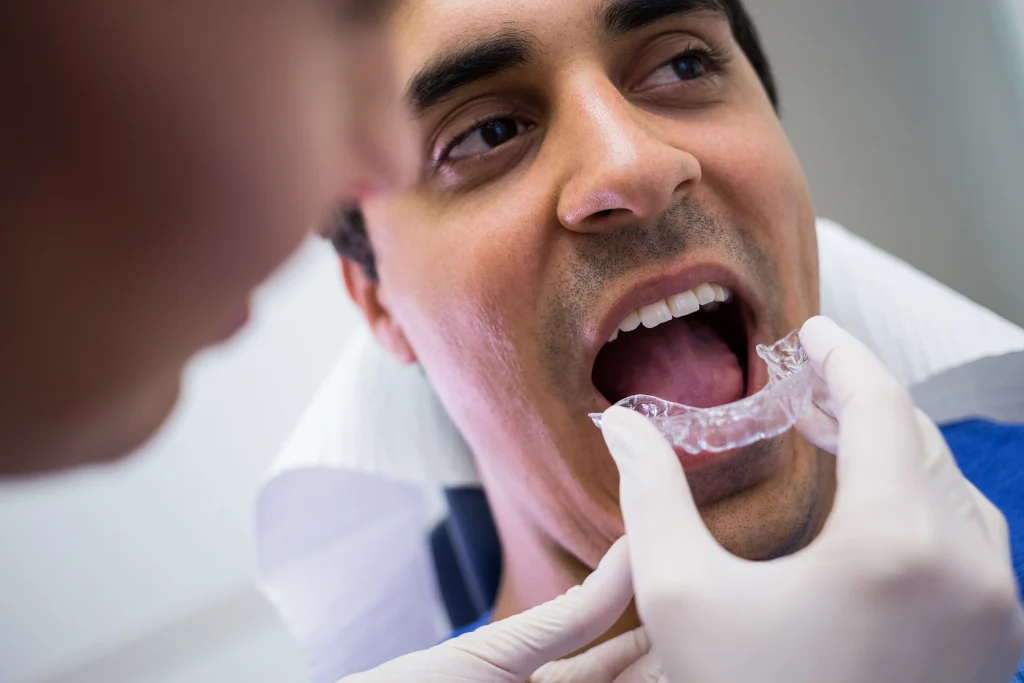
Orthodontic treatment has advanced significantly in recent years, giving patients more choices than ever before. Among the most popular options today are traditional braces and clear aligners. Both treatments are designed to straighten teeth, correct bite issues, and improve overall oral health, but they differ in appearance, comfort, effectiveness, and lifestyle impact.
This in-depth guide compares braces vs clear aligners to help adults and teens make an informed decision based on clinical effectiveness, cost, convenience, and long-term results.
Understanding Traditional Braces
Traditional braces consist of metal or ceramic brackets bonded to the teeth and connected by orthodontic wires. These components work together to apply continuous pressure, gradually moving teeth into their correct positions.
Types of Braces
- Metal Braces: Highly durable and effective for complex cases
- Ceramic Braces: Tooth-colored and less visible
- Lingual Braces: Placed behind the teeth for a hidden option
Braces are commonly recommended for patients with severe crowding, bite problems, jaw misalignment, or rotated teeth.
What Are Clear Aligners?
Clear aligners are custom-made, transparent trays designed using advanced digital technology. Patients wear a series of aligners, changing them every one to two weeks to progressively shift teeth into alignment.
Clear aligners are especially popular among adults and older teens seeking a discreet orthodontic solution.
Braces vs Clear Aligners: A Detailed Comparison
Appearance
Braces are visible, even when ceramic materials are used. Clear aligners are nearly invisible, making them ideal for patients concerned about aesthetics.
Better Option: Clear aligners
Effectiveness
Braces can treat both simple and complex orthodontic cases. Clear aligners are best suited for mild to moderate alignment issues.
Better Option: Braces for complex cases
Comfort
Braces may cause irritation to the cheeks and gums, particularly after adjustments. Clear aligners are smooth and generally more comfortable.
Better Option: Clear aligners
Treatment Duration
Braces typically require 18 to 24 months of treatment. Clear aligners may achieve results in 6 to 18 months, depending on patient compliance.
Better Option: Clear aligners for eligible cases
Oral Hygiene
Braces make brushing and flossing more challenging, increasing the risk of plaque buildup. Clear aligners are removable, allowing normal oral hygiene routines.
Better Option: Clear aligners
Cost
Braces are generally more affordable and often covered by insurance. Clear aligners may cost more due to advanced technology and customization.
Better Option: Braces
Which Is Better for Teens?
Teens often benefit from braces because they are fixed in place and do not rely on daily compliance. Braces are also effective during growth phases when jaw development is still occurring.
Clear aligners can be suitable for responsible teens who can commit to wearing them 20 to 22 hours per day.
Best Option for Teens
- Braces for complex cases or compliance concerns
- Clear aligners for mild to moderate issues with responsible wear
Which Is Better for Adults?
Adults typically prefer treatments that are discreet and comfortable. Clear aligners fit well into professional and social lifestyles, offering flexibility and minimal visibility.
Braces remain a reliable option for adults with advanced orthodontic needs.
Best Option for Adults
Clear aligners in most cases, braces when complexity requires it
Lifestyle Considerations
| Factor | Braces | Clear Aligners |
|---|---|---|
| Eating | Food restrictions | No restrictions |
| Cleaning | More difficult | Easy removal |
| Professional Appearance | Noticeable | Nearly invisible |
| Sports | Mouthguard required | Aligners removable |
Long-Term Results and Retainers
Both braces and clear aligners produce long-lasting results when followed by proper retainer use. Retainers are essential to prevent teeth from shifting back after treatment.
Frequently Asked Questions
Final Recommendation
Both braces and clear aligners are proven orthodontic treatments. The right choice depends on the severity of misalignment, lifestyle preferences, budget, and commitment level.
A consultation with a qualified orthodontist or dentist is essential to determine the most effective treatment for long-term oral health and aesthetic results.